
by Funmi Akinnawonu, FPWA Senior Policy Analyst
The U.S. labor market has long systemically disadvantaged Black women through occupational segregation and racially discriminatory hiring and wage practices, undermining their ability to reach economic security. These long-standing injustices, combined with a shift in federal policies, now leave hundreds of thousands of Black women without the resources needed to build economic security. While the biases and inequities Black women experience in the labor market may not be new, the scale in which Black women are being pushed out of the labor force combined with the intentional dismantling of anti-discrimination protections are uniquely alarming. We now face a crisis that is directly impeding on the opportunities for Black women and their families to achieve economic security, build wealth, and thrive.
Occupational segregation is a historical driver of Black women’s economic insecurity
Occupational segregation is engrained in the fabric of the American labor market and has been harming Black women for generations. It is the systematic sorting of workers into different industries and roles along lines of race, gender, immigration status, disability, and other marginalized identities. It results in the overrepresentation of workers from historically marginalized groups in low-wage, exploitative, and precarious jobs or industries, as well as the underrepresentation of those workers in higher-wage, secure, and influential occupations. One example of occupational segregation is the overrepresentation of Black women in the care and cleaning professions, where jobs feature low wages and poor benefits including insufficient health insurance or retirement savings/pension plans, if those benefits are offered at all.
Their overrepresentation in care and cleaning professions, particularly domestic labor, stems from chattel slavery — making the challenges Black women face in the labor market and ultimately reaching economic security a reflection of current policy choices and historical harms. FPWA’s latest data brief, The Persistence of Precarity: Occupational Segregation in America’s Care & Cleaning Workforces Across Generations, focuses on this history and three occupations where Black women are disproportionately represented: childcare workers, homecare workers, and cleaners (janitors, maids, and housekeepers).
Since the Civil Rights Movement, Black women have simultaneously had more access to higher paid occupations while still disproportionately occupying care and cleaning professions. Gender- and race-based wage and wealth gaps have persisted – when Black women enter high-wage professions where they are disproportionately underrepresented, they often experience larger turnover and less promotions in those environments. Advanced education has mitigated but not eliminated the barriers to higher paid jobs, and changes to federal policy are upending progress, which we can see in new alarming trends in employment and labor force participation.
What current labor market data is not saying about Black women’s experiences
The health of the labor market is often measured and analyzed through the unemployment rate, which provides a limited picture of lived experience – the unemployment rate measures the percentage of U.S. workers who are unemployed but searching for a job. In recent years, disturbing trends in Black women’s employment have surfaced. In 2025, the unemployment rate for Black women surged from 5.4 percent to 7.3 percent; Black women lost jobs at three times the rate of all women in professional and service occupations, with it also taking twice as long to find new work as their White counterparts in the second half of 2025. This trend has particularly impacted young Black women. In August 2025, 19 percent of Black women ages 16-24 in the labor force were unemployed, more than twice as high as the youth unemployment rate for White women and nearly five times higher than the unemployment rate for all women.
While Black women’s unemployment rate has declined in recent months, it is not a sign of economic improvement, because alarmingly Black women’s labor force participation is declining as well. Disturbingly, many Black women have stopped looking for jobs, not necessarily because they’ve given up, but perhaps because they are discouraged by long periods of sustained unemployment. The career opportunities they’re searching for are scarce, as sectors like the federal government have shrunk, and hiring in the business sector has stalled. Black women are not just losing employment; they are actively being pushed out of the labor force.
What makes this era uniquely damaging is that there’s been a decrease in Black women’s labor force participation (the percentage of working age individuals who are either working or looking for work) in the U.S. this year. This decline bucks historical trends – Black women historically have higher rates of labor force participation than other women. In July of this year, 100 percent of the workers who left the labor force were women. Black women accounted for roughly 123,000 or 75% of the women exiting the labor force. This means that 165,000 women, aged 20 and over, have now reached the threshold where they are neither working nor looking for work. These women have not simply given up – the same opportunities simply are not there. Since alternative options like part-time jobs, contract work, and entrepreneurship are captured in labor force participation, the droves of women leaving the labor force – and particularly those who are Black – raises a mysterious and alarming question: where are they going instead? We don’t have a measure to capture these experiences. Are they turning to taking out loans, selling their property, or relying on their partners and family– paths that all but assure their economic security remains compromised. They’re possibly going back to school or a training program in hopes that they’ll land a high paying job when they finish – even this is cause for some concern. While some postsecondary degrees or credentials offset the economic strain of student debt and raise the individual’s earnings , Black women are concentrated in fields like health care, social work, and education where their work is undervalued and underpaid.
How government is closing off Black women’s opportunity for economic mobility and protection against discrimination
In 2025, Black women with bachelor’s degrees experienced the greatest drop in employment and labor force participation compared to those with a high school education, some college, or those with advanced degrees — a direct consequence of the purge of Black women from the federal government through buyouts and layoffs. In the federal government Black women found stable employment and were disproportionately represented in middle income jobs. The cuts made by DOGE reduced Black women’s federal employment by 25 percent, denying a pathway into the middle-class for many Black women workers. The federal government that once provided Black women with a clear path to economic security and wealth building is now pushing them out of the public sector and re-shaping the economy, the demographics of the workforces in higher paid sectors, and institutions that were meant to provide guardrails.
Compounding the impacts of these issues is the failure of government agencies designed to address injustice in the labor market, leaving Black women particularly vulnerable. The U.S. Equal Employment Opportunity Commission’s (EEOC) dismantling of Diversity, Equity, and Inclusion (DEI) initiatives betrays the origins of an agency, founded during the Civil Rights Era, to prevent and address workplace discrimination and remedy the systemic injustices perpetrated against people of color and women in the labor market perpetuated throughout U.S. history. To put it plainly, the EEOC has abandoned its mission and is attacking the very populations it was tasked with protecting.
In July, EEOC proposed a new rule which would remove demographic reporting requirements for tens of thousands of private sector employers to the EEOC, making it harder to track disparities in wages, hiring, or promotions faced by Black women. In the past, this information has been used by EEOC to initiate enforcement action, and by workers experiencing discrimination to support their claims. This data is also used by researchers, policymakers, and advocates seeking to address systemic disparities like the gender and racial wage gaps and occupational segregation.
These federal rollbacks further play out on a local level due to the underfunding of entities that would enforce anti-discrimination laws.
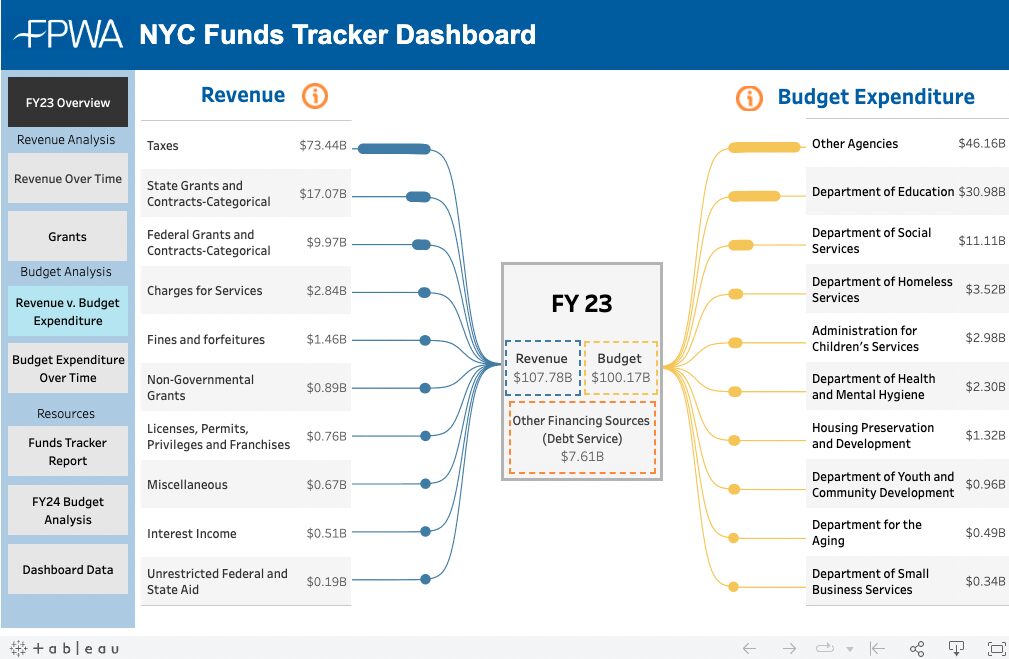
New York City, for instance, has some of the most robust civil rights laws in the country. Yet the agency tasked with enforcing this law in employment settings and broadly, the New York City Commission on Human Rights (CCHR), is chronically understaffed and underfunded. This leaves many of their complaints to be administratively closed without resolution. In a context where the federal government is shifting away from enforcing anti-discrimination laws, a well-resourced CCHR is even more vital for the well-being of New York City’s workers.
In this moment, we must ask ourselves what the long-term economic security and protection of Black women and Black households looks like in a labor market that systemically exploits Black women, disproportionately sorts them into low-wage work, fails to protect them when they enter higher wage occupations, and pushes them out of the labor force. Protecting Black women in the labor force and addressing the systemic harms of occupational segregation goes hand in hand with advancing Black women’s economic security. The current labor market crisis facing Black women is not one of individual wrongdoing, but one that requires a suite of policy solutions to meet both their immediate needs for support, and address the long-term change needed to achieve economic security and build wealth.